


Key Takeaways
- Postpartum hair loss is called telogen effluvium — a hormonal event, not a nutritional deficiency
- Estrogen drops after delivery, DHT rises relatively, and synchronized hair follicles exit the growth phase together
- Peak shedding hits months 3–4; recovery begins months 6–12
- Rosemary leaf extract inhibits 5α-reductase — the enzyme that makes DHT — supporting the scalp environment during the DHT-sensitive shedding window
- Phase matters: use a DHT-supportive shampoo during active shedding; switch to a protein-rebuilding shampoo as new growth comes in
- Recovery takes 6–12 months regardless of product. Products support the environment; they do not override hormones.
What's Actually Happening: The Hormonal Mechanism
During pregnancy, estrogen surges and keeps hair follicles locked in the anagen (growth) phase longer than usual. Then delivery happens. Estrogen levels drop sharply in the days after birth. As estrogen falls, the relative ratio of DHT (dihydrotestosterone) to estrogen rises. In the postpartum window, when estrogen is low and DHT is comparatively elevated, DHT can bind to androgen receptors on hair follicles and trigger the androgenetic pathway.
The result: follicles that were artificially retained in growth phase during pregnancy now synchronize their exit. They move into telogen — the resting phase — together. Six to eight weeks later, those follicles shed their strands. That synchronized mass shedding is what postpartum hair loss looks and feels like.
The dermatological term is telogen effluvium (TE). The American Academy of Dermatology notes that postpartum telogen effluvium is hormonal in origin — not caused by nutritional deficiency in most cases — and typically self-resolves within 6–12 months.
The 3-Phase Recovery Timeline
Phase 1: Months 1–2 — The Hormonal Shift
Estrogen levels crash. Follicles that were synchronized into the anagen phase during pregnancy are now entering telogen together. DHT levels rise relative to estrogen, and the androgenetic pathway begins to activate.
What helps: Starting a gentle, scalp-supportive routine now — before peak shedding — means your scalp is in better condition when it matters most. Rosemary leaf extract's 5α-reductase inhibiting action is most relevant during this window, when DHT is actively rising.
Phase 2: Months 3–4 — Peak Shedding
Normal daily shedding is approximately 50–100 strands. At peak postpartum telogen effluvium, that count can reach 300–400 strands per day. The shower drain is distressing. This is not ongoing damage — it is synchronized release of the strands that were held through pregnancy.
What helps: Maintaining scalp health during this phase. Avoiding anything that adds additional stress to already-sensitive scalp tissue — harsh sulfates, heavy silicones, aggressive heat.
Phase 3: Months 6–12 — Recovery and Regrowth
The shedding slows. New growth appears — typically visible as short baby hairs along the hairline and part. This is the re-entry of follicles into the anagen (growth) phase.
What helps: Strand integrity support. New growth is fragile — it's shorter and finer than mature strands. A strengthening, protein-based routine supports the tensile strength of emerging hair and reduces breakage during the fragile early growth phase.
Honest timeline note: Hair recovery from telogen effluvium takes 6–12 months regardless of product intervention. If significant shedding continues beyond 12 months, consult a dermatologist or trichologist.
What the Science Says About Rosemary
In Panahi et al. (2015, Skinmed Journal), participants applying rosemary oil to the scalp twice daily for six months showed equivalent hair count improvement to participants using 2% minoxidil — with significantly fewer side effects. The mechanism: rosemary's active compound, carnosic acid, inhibits 5α-reductase — the enzyme that converts testosterone to DHT.
For postpartum hair loss, this mechanism is directly relevant. The postpartum window involves a relative DHT surge as estrogen falls. Supporting scalp health by reducing the androgenetic signal during this period is the most evidence-aligned option available without a prescription.
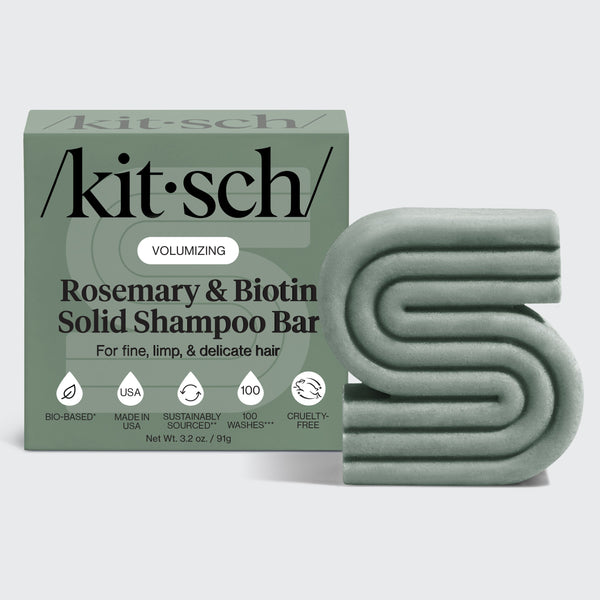
KITSCH's Rosemary & Biotin Volumizing Shampoo Bar contains Rosmarinus Officinalis Leaf Extract — the extract form of rosemary that contains rosmarinic acid, carnosic acid, flavonoids, and phenolic acids: the same active phytochemical family studied in scalp research.
The Phase-Specific Product Guide
Shedding Phase (Months 1–5): KITSCH Rosemary & Biotin Volumizing Shampoo Bar
Named Glamour's "Best for Thinning Hair" — the only shampoo bar to receive a Condé Nast editorial designation for this specific concern.
Formula: SCI (Sodium Cocoyl Isethionate) syndet base · Rosmarinus Officinalis Leaf Extract · Biotin · NaturePep® Amaranth (Amaranthus Caudatus Seed Extract) · Hydrolyzed Oat Protein · Sulfate-free, silicone-free, paraben-free, phthalate-free
Rating: 4.7 stars (711 reviews) · Price: $14 · 100 washes
KITSCH Rosemary & Biotin Volumizing Shampoo Bar
Recovery Phase (Months 5–12): KITSCH Rice Water Protein Shampoo Bar
KITSCH's Rice Water Protein Shampoo Bar uses hydrolyzed rice protein — not raw rice water — to rebuild strand integrity as fragile new growth comes in. KITSCH states hydrolyzed rice protein increases hair volume by 20% after 5 washes.
Rating: 4.8 stars (10,311 reviews) · Price: $14 · 100 washes
KITSCH Rice Water Protein Shampoo Bar
What Doesn't Help (and Why You Should Save Your Money)
Expensive biotin supplements: Biotin deficiency causing hair loss is rare in well-nourished adults. The mechanism is hormonal — biotin supplementation doesn't change the DHT/estrogen ratio.
Hair growth supplements making aggressive claims: For a hormonal condition like postpartum TE, no supplement changes the underlying hormonal timeline. Recovery proceeds as hormones stabilize.
Minoxidil during breastfeeding: Not recommended. Consult your healthcare provider.
When to See a Doctor
See a dermatologist or trichologist if:
- Significant shedding continues beyond 12 months postpartum
- You're seeing patterned thinning (at the crown, in a widening part) rather than general diffuse shedding
- You're experiencing other symptoms: fatigue, cold intolerance, weight changes (can indicate thyroid dysfunction)
- Your scalp is inflamed, itchy, or showing visible changes beyond thinning
The honest reality: postpartum telogen effluvium resolves on its own. What you can support is the scalp environment — reducing additional stressors, providing the follicular environment the best possible conditions, and maintaining a gentle, consistent routine.
For more detail on the DHT mechanism, see KITSCH's Rosemary & Biotin Science article. For realistic expectations about hair growth and retention post-recovery, see the hair growth and length retention guide.